
The Visionary Behind Lebara
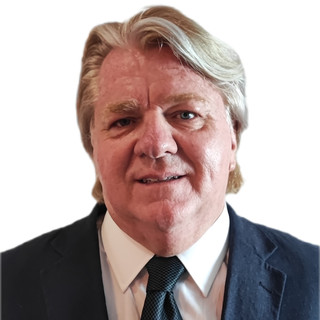
Rasiah Ranjith Leon on Immigrant Entrepreneurship, Global Growth,
and Lasting Impact
Interviewed by Kristian Aartun – Founder & Chairman, Norwegian International Entrepreneur Conferences (NIEC)
It is with the utmost respect and sincere appreciation that I welcome Mr. Rasiah Ranjith Leon to this distinguished interview, presented under the auspices of the Norwegian International Entrepreneur Conferences.

Mr. Leon’s remarkable journey—from his early life amidst civil unrest in Sri Lanka to co-founding the internationally recognized Lebara Group—is a profound testament to resilience, vision, and principled leadership. His contributions to both business and humanitarian spheres reflect the values we celebrate at NIEC: integrity, innovation, and impact.
This dialogue offers invaluable insights not only into the world of entrepreneurship but into the character and convictions required to lead with purpose. We are honored to share Mr. Leon’s perspectives with our global community of entrepreneurs, investors, and thought leaders.
Personal Journey & Early Life
Can you share insights into your early life in Jaffna, Sri Lanka, and how those experiences shaped your worldview?
I was born in Jaffna but spent only a short time there before moving to Batticaloa due to my late father’s employment. After his passing, we moved to Colombo. As someone who values peace, harmony, and unity across all communities, life as a Tamil minority during the civil war was deeply challenging. Despite the turmoil, the aspiration to become an entrepreneur was always in my DNA. While in Colombo, I launched my first company, trading stationery and office equipment. It grew rapidly—employing nearly 300 people. However, civil unrest imposed severe challenges. These conditions drove my desire to explore business beyond Sri Lanka.
What motivated your decision to seek asylum in Norway in 1994?
I’ve never judged others based on ethnicity, color, or religion—and found the increasing hostility difficult to bear. I wanted to raise my future family in a secure environment where they had equal rights. As my business became more visible, my personal safety came into question. During a business trip to Norway, I realized it would offer the safety and stability I was seeking, so I decided to apply for asylum.
How did early jobs in Norway, like working at the post office, influence your work ethic?
These jobs grounded me. The dignity of labor resonated deeply. A quote I lived by was, “Honour and shame from no condition rise; do your part well—there lies all the honour.” Starting as a cleaner and sorter laid a strong foundation. I upheld discipline and pride in every role I held. Success was never about the task but the approach.
Did your background in physics influence your business approach?
My academic foundation in physics helped me think analytically, but it was real-world experiences—interacting with different people and environments—that shaped my entrepreneurial instincts. Formal education set the base; the rest was molded by Places, Purpose, and People.
Entrepreneurial Ventures & Business Philosophy
What inspired the founding of Lebara Group in 2001?
The idea came from personal need. International calls to Sri Lanka were costly. After a family gathering in Bergen, my two co-founders and I—standing outside the Telenor tower—decided to build a company offering cheaper, higher-quality international calls. Our mission was to help immigrants stay connected with family, create jobs, and build something financially sustainable. Profit wasn’t the goal—pride in our work was.
How did your partnership with Ratheesan Yoganathan and Baskaran Kandiah come about?
We had complementary skills and shared a vision. Despite being based in different countries—Ratheesan in the UK, Baskaran in the Netherlands, and I in Norway—we saw a common opportunity. After a party in Bergen, on the way to the airport, we committed to creating a telecom solution. The name "Lebara" is derived from the initials of our names: Leon, Baskaran, and Ratheesan.
How did you identify the market need for international calling cards?It stemmed from our own experiences. The major telecoms ignored immigrant communities, assuming they weren’t a significant market. We knew otherwise. We started by visiting small, ethnic shops and building grassroots distribution. Our strategy was lean and hands-on.
How did Lebara evolve into a global MVNO?
That was always the plan. We first built a loyal customer base by offering honest calling card services—delivering exactly what we promised. This integrity earned trust, which was vital when transitioning to prepaid GSM services as an MVNO. We focused on superior technology, value for money, and customer satisfaction.
What pivotal decisions shaped Lebara’s growth?
Divesting Lebara Norway and Switzerland was key. These moves allowed us to reinvest in larger markets like Spain, the Netherlands, and Australia. Letting go of a sentimental market like Norway was hard but necessary for scaling up.
How did you manage international expansion?
We divided responsibilities across countries and relied on local experts familiar with regulations and consumer behavior. Delegation and trust were crucial. We viewed our team as family and invested in continuous training and compliance.
What lessons did you learn from selling Lebara Norway?
A company led by its founder feels different from one managed by a financial group. The heart and spirit are often stronger when leadership is personal.
Through Leon Holding AS, what sectors are you focused on now—and why?
Our core investments are in aquaculture and renewable energy—both critical for global well-being. We also invest passively in real estate and hospitality. But I prefer industries where I can actively contribute. In Sri Lanka, we’re the largest producer of shrimp and crab, and our aquafarms employ only women. Our clean energy projects in India address growing power needs sustainably.
How do you assess investment opportunities?
In this order:
Does it meet a real market need?
Is it beneficial for the community and planet?
Cash flow viability
Risk exposure
What is LBR Investments BV’s role?
It’s our joint investment firm—myself, Baskaran, and Ratheesan. Most of our group investments are funneled through this entity.
How do you manage risk?
We constantly assess market assumptions, choose partners wisely, and plan conservatively. Experience has taught us where the real pitfalls lie.
How do you promote innovation?
I maintain open lines of communication. My office door is always open. Empowered employees are more innovative. Their ideas and initiative shape our future.
Is sustainability a core value for your investments?
Absolutely. We run our shrimp farms responsibly and are committed to renewable energy. I would never invest in something that harms the planet.
How do you balance long-term vision with short-term goals?
I focus almost entirely on long-term outcomes. That’s where true value lies.
Can you share a business challenge and how you overcame it?
Launching Lebara Play involved tackling piracy. We partnered with tech experts and regulators to protect the platform and invested heavily in consumer education—changing user behavior was the biggest challenge.
Leadership & Management
How would you describe your leadership style?
I lead with fairness and respect. Whether someone is a receptionist or a director, I treat them equally. Happy teams perform best. Over the years, I’ve become better at reading people and fostering loyalty.
What are essential traits for today’s leaders?
Integrity, honesty, confidentiality—and most importantly, your word must be your bond. I’d rather lose a deal than break a promise.
How do you build strong teams?
By giving freedom and hiring people who are smarter than me in their field. Delayed decisions are poor decisions—so I encourage timely, independent action.

How do you mentor emerging leaders?
If someone shows potential, I give them challenges. If they know 90% of a job, they’ll grow. If they know 110%, there’s no room to stretch.
How do you make decisions under pressure?
I consult my team and weigh multiple viewpoints. Intuition also plays a role—it’s been a reliable guide throughout my life.
How do you ensure accountability and performance?
Involve employees sincerely. Make them feel they are co-owners of outcomes. Responsibility follows naturally.
How do you stay informed globally?
By staying open. I talk to everyone—from taxi drivers to leaders. That diversity of input gives me real-world awareness.
How do you foster diversity and inclusion?
It’s essential. In Lebara Norway, we had over 30 nationalities. I wanted everyone, regardless of background, to feel equal.
How do you align teams with your mission?
Avoid echo chambers. Build teams that see from different angles.
Can you share a tough leadership decision?
Selling the Norwegian operation was emotionally difficult. It was our first business and a symbol of our journey. But strategically, it was the right call.
Philanthropy & Social Impact
What inspired the Lebara Foundation?
The 2004 tsunami was a turning point. We saw immense suffering and knew we had to act. Since then, we’ve committed to creating impact through education, healthcare, clean water, and dignity.
Key foundation initiatives?
Sri Lanka: 2,800 people given artificial limbs, 75+ families supported into dignified livelihoods, and 8,000+ children served through educational centers.
India: 189,000 Sri Lankan refugees supported, with daily nutrition for 12,000 children, safe drinking water for 18,000 families, and cancer treatment for over 3,000 children.
We’ve also supported 268 university students from underprivileged communities.
How do you measure impact?
Through human connection. The smiles of children, hope in elderly eyes—those are the real metrics. We don’t measure success in numbers alone, but in lives changed.
What challenges have you faced in philanthropy?
Not being able to help more. We’re hands-on, which reduces risks—but the need is always greater than our capacity.
How is social responsibility integrated into your business?
A portion of business liquidity always goes to the foundation.
Advice for entrepreneurs wanting to give back?
Be hands-on. Set clear goals—and stick to them.
Personal Insights & Future Outlook
How do you balance work and life today?
Since stepping back from daily operations at Lebara, I’ve had more time for family. I realized early on that tempo alone can’t sustain balance.
What personal values guide you?
Honesty and loyalty. Money comes and goes, but relationships and integrity endure.
What are your goals for the next decade?
I hope to see my children carry on what I built and grow it with pride. I want my businesses to give back. Personally, I want to be present for my grandchildren and be a role model for them.
What legacy do you want to leave behind?
If my name is remembered, I hope it's for someone who kept his word, stayed committed, and proved that even an asylum seeker can create lasting value. We enter the world with nothing and leave the same—only our actions echo beyond.
"We come into this world empty-handed and leave the same—only our actions echo beyond the silence."
Closing Reflection
Kristian Aartun – Founder & Chairman, NIEC
As this exclusive interview concludes, I extend sincere gratitude to Mr. Leon, the Visionary Behind Lebara,. His story is the embodiment of our 2025 theme: Founders Without Frontiers. His life exemplifies courage, clarity, and compassion—and reminds us that the human spirit knows no boundaries when fueled by vision and integrity.


Comments