
Hendrik van der Ham: Building Bridges, Connecting People and Reimagining the Future of Sustainable Living
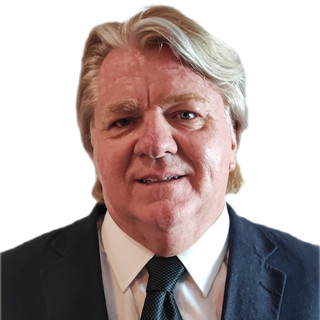
NIEC Magazine | Exclusive Interview
Interview by Kristian Aartun, Founder & Chairman of the Norwegian International Entrepreneur Conference (NIEC)

What does it take to transform an ambitious idea into a successful international business? And how can entrepreneurial experience, engineering innovation and a commitment to sustainability help shape the way future generations live and work?
For Dutch entrepreneur Hendrik van der Ham, entrepreneurship has always been about more than building companies. It is about solving real problems, connecting people and creating lasting value.
His entrepreneurial journey began in the maritime industry, where his passion for engineering and practical innovation led to the establishment of BRIDGES2000 in 1999. The company provides specialised engineering and access solutions for the maritime, offshore, construction and events industries, guided by its philosophy: FAST – SAFE – FIT FOR PURPOSE.
But Hendrik's ambitions extend far beyond conventional engineering.
Through Seventh Project Development, he is pursuing a visionary concept for climate-adaptive floating destinations that bring together architecture, renewable energy, intelligent technologies, circular resource management and international cooperation.
Under the philosophy "The Other Way of Living," Seventh explores how future communities could offer a more sustainable, resilient and meaningful quality of life.
In this exclusive interview for NIEC Magazine, Kristian Aartun speaks with Hendrik about his entrepreneurial journey, the evolution of BRIDGES2000, the vision behind Seventh, international business opportunities, investment, sustainability and the responsibility of entrepreneurs to contribute to a better future.
Their conversation also examines leadership, the importance of trust and professional relationships, and the courage required to challenge conventional thinking and pursue ambitious ideas.
As the Norwegian International Entrepreneur Conference celebrates its 15th anniversary in 2026 under the theme "Creators of Change," Hendrik's entrepreneurial journey offers an inspiring perspective on how innovation, determination and international collaboration can help shape tomorrow's world.
The Entrepreneur Behind the Businesses
1. Hendrik, what inspired you to become an entrepreneur, and how has your journey evolved?
My journey began in the maritime world, influenced by my family's involvement in navigating with ships and later with shipbuilding. I have always been fascinated by engineering, solving problems and connecting people.
Entrepreneurship gave me the freedom to turn ideas into practical solutions. Through BRIDGES2000, I have focused on safe access and engineering solutions. With Seventh Project Development, my ambitions have expanded towards creating a more sustainable and meaningful way of living.
For me, both businesses share the same foundation: connecting people, ideas and opportunities. Although Seventh gives the push to a more ethical world.
2. What do you believe separates a successful entrepreneur from someone who simply has a great idea?
The difference is execution. An idea only becomes valuable when someone takes responsibility for making it happen.
Successful entrepreneurship requires persistence, practical thinking, adaptability and the courage to make decisions under uncertainty.
My advice is simple: think ambitiously, solve real problems and build trust through your actions, but also really invest (also money) in your own ideas.
3. What has been the biggest risk or challenge in your entrepreneurial career, and what did it teach you?
One of my biggest risks has been pursuing Seventh, a visionary project that goes far beyond conventional business activities. It takes long. And sometimes it is a lonely journey.
Unlike BRIDGES2000, which provides practical solutions to immediate customer needs, Seventh requires long-term thinking, international cooperation and investment before the final outcome can be determined.
I have learned that courage does not mean ignoring uncertainty. It means understanding the risks and continuing to work towards something worthwhile in a resilient way. It is again and again standing up and doing the same many, many times.
4. How would you describe your leadership style, and what values guide your businesses?
My leadership style is entrepreneurial, solution-oriented and focused on bringing the right people and professionals together.
I believe in honesty, respect, responsibility and giving talented people the freedom to contribute their expertise.
At BRIDGES2000, safety and reliability are fundamental. With Seventh, I place additional emphasis on sustainability, inclusivity and improving quality of life.
Leadership is not about knowing everything yourself. It is about creating the conditions for people to achieve something meaningful together.
BRIDGES2000: Building Connections

5. What inspired the creation of BRIDGES2000, and what makes the company unique?
BRIDGES2000 was established in 1999, building on my experience in maritime engineering and practical problem-solving.
We recognized the need for safe, flexible and reliable access solutions in industries such as maritime, offshore, civil constructions and events.
Today, we provide bridges, gangways, pontoons, fenders and customized engineering solutions.
Our philosophy is straightforward: FAST – SAFE – FIT FOR PURPOSE.
We do not simply supply equipment. We work with customers to understand their challenges and the challenges of their clients and deliver the right solutions.
If our customers are able to sleep tight, we did what we had to do and brought value.
6. Can you share a project that demonstrates BRIDGES2000's engineering expertise?
One example is our work for Van Oord in Dubai, involving the vessels Mersey and Maas for an opening event.
The project required safe access between two ships and different working areas. We provided specialized gangways and additional platforms and fenders to create the necessary connections.
We have also delivered offshore solutions in challenging environments such as the North Sea and Irish Sea, where equipment must accommodate wind, waves and vessel movements.
These projects demonstrate our ability to combine engineering creativity with safety and practical performance.
7. How important are innovation, artificial intelligence and new technologies to the future of BRIDGES2000?
Innovation is essential, but it must solve real problems. Artificial intelligence can improve project planning, equipment management and the identification of potential risks.
Automation, digital systems and advanced materials may also improve efficiency and safety.
We are implementing systems such as CGS2 to improve control in offshore applications.
However, technology must always be combined with human experience and, even more importantly, human expertise, sound engineering judgment and ethical responsibility.
8. Where do you see BRIDGES2000 in the next five to ten years?
I want BRIDGES2000 to strengthen its international position as a trusted specialist in safe access solutions.
We see opportunities in maritime infrastructure, offshore energy, civil construction worldwide and specialized engineering.
Our priorities are innovation, reliability, international partnerships and maintaining high safety standards.
Growth is important, but my ambition is not simply to make the company bigger. It is to make it stronger, more capable and more valuable to our customers.
Seventh Project Development: The Other Way of Living

9. Hendrik, where did the idea for Seventh Project Development originate?
Seventh grew from my lifelong connection with water, engineering and my interest in the future of humanity.
But actually, I have to go back in time. People told me about Atlantis, and that it was a city that was flooded. I did not believe that and also not the stories about the location.
And because of a story of the "Sleeping Prophet" who told that Atlantis was coming up again, I travelled to the Bahamas to dive and see it with my own eyes.
There, in those six weeks, it happened. There I had those 40 nights of special lucid dreams about the project of Seventh.
Next to this is that I had always a larger question in my mind circulating: How can we create environments where people live, work and cooperate in healthier, more sustainable and more ethical ways?
That question became the foundation of Seventh.
Our vision is to develop climate-adaptive floating destinations that combine architecture, technology, sustainability and international cooperation, dynamic, harmonious places, pivotal places where we will design a world with elevated quality of life.
We call this philosophy "The Other Way of Living."
Ultimately, Seventh is about creating a better future for our children and their children.
10. How would you describe Seventh to someone hearing about the project for the first time?
Seventh is a visionary concept for sustainable floating destinations where people can live, work, innovate and collaborate.
The architectural concept includes a circular floating island with distinctive pyramid-shaped buildings.
It combines business activities, residential spaces, wellness, recreation, sustainable technologies and international cooperation.
But Seventh is more than a real estate project. It is an opportunity to explore a new circular economy and a different approach to quality of life.
11. Seventh has a connection to Dubai. What makes Dubai an attractive location for developing ambitious, innovative and sustainable projects?
Dubai is an interesting environment for an ambitious project because of its international character, its position as a business and transport hub, and its experience with large-scale real estate and infrastructure development.
Next to this is what they did already in the water.
Dubai and how they develop brings together people, companies, investors and technical expertise from many different countries.
For a project such as Seventh, international cooperation is particularly important. The development would require collaboration across architecture, marine engineering, energy, sustainability, finance and technology.
Dubai also provides a relevant setting for exploring how cities and coastal environments can respond to climate challenges, resource constraints and changing expectations about quality of life.
However, an attractive location is only one part of the equation. A viable project would also require a suitable site, comprehensive environmental and technical studies, alignment with local planning requirements, the necessary permits, a credible financial structure and the support of qualified partners.
My interest in Dubai comes from the possibilities it offers for international cooperation and ambitious development and that it is able to "Lead the Way" to more suitable societies and that it likes to be the best.
12. Many companies talk about sustainability, but implementing it can be challenging. What practical technologies and design principles are central to Seventh's environmental ambitions?
No greenwashing. Sustainability must be considered from the beginning of the design process rather than added later as a marketing feature.
For Seventh, the starting point is to examine the entire system: the structures, materials, energy supply, water use, food production, waste management, transportation and the quality of the environment in which people live.
Although we are in general forgetting one very important thing: how long are we lasting? Our bodies and think about housing.
If we keep buildings much longer, using them, we are much better off. This should balance the materials we are using.
Within Seventh we are using concrete, but with fibre reinforcements. Because Seventh will be used very long and will be the first of many, we will here see a centre where we design and choose for more resilient and green, but step by step.
Circularity is an important principle. We should look for opportunities to reduce resource consumption, extend the life of materials, reuse resources and minimize waste.
Energy efficiency is another priority. Buildings should be designed to reduce unnecessary energy demand through appropriate orientation, shading, insulation, ventilation and intelligent building systems.
Water management would also be essential, particularly in a coastal development.
Potential approaches could include water-efficient equipment, rainwater collection where suitable, and wastewater treatment and reuse, subject to local conditions and regulatory requirements.
The water cleaning systems are partly on the island and another part will be within the seabed, which was never done before, but works well.
Renewable energy, responsible material selection and ecological impact assessments would need to be considered as part of the wider system.
Importantly, the actual environmental benefits must be demonstrated through analysis and measurement.
My ambition is for Seventh to explore an integrated approach to sustainability, where the different systems reinforce one another instead of being developed in isolation.
13. How does Seventh plan to integrate renewable energy, solar power and intelligent energy management, and what level of energy self-sufficiency do you believe is realistically achievable?
Renewable energy and intelligent energy management are important elements of the Seventh vision.
Solar power is an obvious technology to investigate for a development associated with Dubai, given the region's strong solar resource.
However, the actual potential would depend on the available surface area, building design, shading, equipment performance and the relationship between energy production and demand.
The design would need to consider energy efficiency first. Reducing demand can be just as important as increasing production.
Intelligent energy management could coordinate building systems, cooling, lighting, storage and other energy-consuming equipment.
Battery storage or other suitable storage technologies could help balance differences between production and consumption.
Depending on the final design, additional renewable energy sources and connections to external infrastructure might also be appropriate.
I would not claim a specific percentage of energy self-sufficiency before detailed engineering studies have been completed.
A realistic target must account for the development's actual energy demand, seasonal variations, storage requirements, reliability and the cost of the overall system.
My objective is to investigate how far an integrated design can reduce dependence on conventional energy supplies while maintaining a comfortable, safe and reliable environment.
The final performance targets should be based on evidence rather than promises.
These new systems will be designed and integrated on the islands after being built, for the solutions will come from the students and the independent research centres. Better solutions than we can think about just now.
14. Seventh's concept includes vertical farming and advanced agricultural technologies. Why do you believe food production should become an integrated part of future residential and commercial developments?
Food is fundamental to human well-being, yet in many urban environments the systems that produce and distribute it remain largely disconnected from the places where people live and work.
I believe future developments should explore whether some food production can be brought closer to the people who consume it.
Vertical farming and controlled-environment agriculture can offer opportunities to produce certain crops in relatively compact spaces.
Depending on the system and crop, these approaches may improve control over growing conditions and reduce the need for long-distance transportation.
They could also create educational opportunities and help people better understand the relationship between food, resources and the environment.
However, vertical farming is not automatically sustainable. Artificial lighting, climate control, water treatment and other systems can require considerable energy and investment.
The right approach would be to identify suitable crops, evaluate the local conditions and compare the environmental and economic performance with alternative food-production methods.
For Seventh, I see integrated food production as an opportunity to explore greater resource efficiency and resilience.
The objective would not necessarily be to produce every type of food on site. It would be to determine which forms of production make practical sense within the wider development and will make life more resilient.
15. How do you envision artificial intelligence and smart technologies improving life within Seventh?
Technology should serve people, not the other way around.
Artificial intelligence and smart-building systems could help manage energy consumption, water resources, maintenance and environmental conditions.
Automation could improve operational efficiency, while intelligent systems could support comfort, safety and well-being.
However, privacy, cybersecurity, reliability and ethical considerations must remain essential.
The goal is not to create a world dominated by machines, but a better environment for human life.
16. Seventh combines residential spaces, business facilities, wellness and recreation. Why is this integrated approach important for the future of urban development?
I believe that the way we organize our physical environments has a significant influence on how we live.
When homes, workplaces, recreation, wellness and social activities are separated, people may spend considerable time travelling between them. This can affect their time, energy, relationships and daily quality of life.
An integrated development offers the possibility of bringing some of these functions closer together.
Next to this, we do see many business people and the very rich combining their time, doing business and at the same time or the day after having some time to relax.
This is actually the most important reason, for it gives highest comfort to the dynamic space of Seventh.
For Seventh, the intention is to explore an environment where people can live, work, learn, relax and interact within a coherent setting.
Although living is not the main reason for Seventh's existence. Seventh will also be a very dynamic environment.
The benefits would depend on how the project is designed and operated. Integration must not come at the expense of privacy, accessibility, public safety or the needs of different groups.
I am also interested in the social dimension of urban development. A place should encourage people to connect while respecting their differences.
Wellness should be understood broadly, encompassing physical health, mental well-being, access to nature, opportunities for activity and the quality of social relationships.
Ultimately, the question is not simply how many facilities we can place in one development. It is whether the overall environment enables people to live better lives.
17. Large-scale visionary developments require significant investment and strong partnerships. What types of investors, technology partners and international organizations are you looking to collaborate with?
A project such as Seventh requires a broad partnership structure because no single organization can provide all the necessary expertise, capital and operational capabilities.
I see potential roles for several groups.
I will start with step Zero and will go from there. After this step, structured will give more attention to the three funds and the big investment can come in.
So after Zero, it is only the check of all these feasibility studies and go; Zero, we do need now reports of one of the Big Four, a stamp on it works.
For the check with a due diligence for the bigger amounts and for getting more strategic partners on board, we will do following again:
First, experienced real estate and infrastructure investors would be important in assessing the commercial model, capital requirements and potential development structure.
Second, marine engineering companies, architects, structural engineers and specialist contractors would be needed to assess the floating infrastructure, buildings and associated systems.
Third, technology partners could contribute expertise in renewable energy, energy storage, water treatment, circular resource management, smart buildings and controlled-environment agriculture.
Fourth, universities and research institutions could help evaluate the technical, environmental and social aspects of the concept.
Finally, public authorities, international organizations and institutions interested in sustainability, education and global cooperation could contribute through dialogue, expertise and appropriate partnerships.
I am particularly interested in partners who are willing to examine the concept critically and help turn it into a credible proposition.
For me, the best partnerships combine a shared purpose with professional competence, transparency and clear responsibilities.
We need to think strategically. Seventh is even more interesting than people are able to think. But I do not want to make any bigger than imaginable promises.
The objective is to establish a sound foundation on which the project can be developed step by step, a new circular economy, the real foundation for a sustainable society everywhere.
18. What is the current development stage of Seventh, what are the most important milestones ahead, and what needs to happen before the vision can become a functioning destination?
Seventh is an ambitious development concept, and it is important to distinguish the vision from the physical realization of the project.
Now it is at the end of the conceptual stage.
Stepping in now as Crazy Friend for Seventh is the best thing people can do. So we are looking now for these Crazy Friends for Seventh.
The most important milestones include defining the project scope, identifying and assessing a suitable location, undertaking marine and environmental feasibility studies, and developing a preliminary architectural and engineering design.
There will be ten locations designated worldwide.
And we did these important milestones, and this is why we can say: we are with Seventh at the end of the Conceptual Phase.
International Entrepreneurship & Investment
19. What are the biggest differences between doing business in the Netherlands, Dubai and other international markets?

Every market has its own business culture, decision-making processes, regulatory environment and expectations concerning relationships.
In the Netherlands, I am familiar with a business environment in which direct communication, practical problem-solving and clear agreements are important.
BRIDGES2000 has developed within this environment, serving customers who need reliable solutions and straightforward cooperation.
Next to this is a fact that in the Netherlands companies are in general very small, working together is very usual and, because the Netherlands is very small, overseas markets are needed and aimed for almost from the start of every company like BRIDGES2000.
BRIDGES2000 is now scaling up, which means that we do the due diligence and have all compliant, which makes next steps suitable, also for investors.
Dubai offers a different international context. It brings together companies and entrepreneurs from many countries and provides opportunities to build relationships across different markets. It's a harbour for all those other destinations.
In such an environment, understanding cultural differences becomes particularly important. Communication styles, negotiation processes and expectations about how relationships develop may vary.
However, some principles are universal.
People want to work with partners they can trust. They want clarity about responsibilities, confidence in the quality of the work and a realistic understanding of the commercial arrangements.
My approach is to respect local business practices while remaining clear about the objectives and standards I consider essential.
International entrepreneurship requires adaptability, but it should not require abandoning your fundamental values.
20. How do you approach raising capital for projects that are innovative, capital-intensive and potentially unfamiliar to traditional investors?
I believe the first step is to translate the vision into a proposition that investors can assess objectively.
An ambitious concept may attract attention, but serious investment decisions require much more than an inspiring presentation.
What I further think is that you cannot bring your money to heaven, but legendary projects are the key. Investing in such projects brings fame for the investors and the families.
Of course investors need to understand the development plan, the market opportunity, the technical feasibility, the capital requirements, the principal risks and the proposed route to financial returns.
For a project such as Seventh, this means developing the concept through clearly defined stages.
In an end-of-concept phase we need to emphasize what is there, what is the potential and opportunity. That is what we do.
21. When presenting a visionary project like Seventh to investors, what do you believe is the most important factor in gaining their confidence and long-term commitment?
Credibility is the most important factor.
A vision can be inspiring, but investors must also understand that the people behind it recognize the practical challenges and have a plan for addressing them.
For Seventh, I would want investors to understand both the ambition and the development process required to achieve it.
That means presenting a clear project scope, credible technical assessments, realistic financial assumptions and a transparent evaluation of the risks.
It also means being honest about what has been established and what still needs to be investigated.
I believe the quality of the team is equally important. Investors need confidence that the project can attract the necessary engineering expertise, commercial capability and operational experience.
Finally, there must be a clear reason for the project to exist beyond its architectural appearance.
For Seventh, that reason is the opportunity to explore a more sustainable and integrated approach to living, working and international cooperation.
That is not Seventh but the Foundation: the SSHC / Seventh Shared Humanity Centre Foundation that brings together talent and makes it possible to bring a change to this world.
For investors: My aim is to build a proposition that combines an inspiring purpose with evidence, professional discipline and a realistic path towards implementation, with investors with vision, so with strategic investors.
Only money is a blind-eyed investment, mostly only to gain more money. Although money will always be there and will be the outcome of good entrepreneurship.
But fast and more resilient should be the factors that need to get more attention.
22. How do you divide your time and resources between BRIDGES2000 and Seventh Project Development while ensuring that both receive the attention they need?
The two activities require different approaches, and I believe it is important to recognize that distinction.
BRIDGES2000 is an established operating business. It has customers, employees, suppliers and projects that require practical decisions and consistent attention.
The priority is to maintain service quality, safety, reliability and commercial performance.
What I actually need to say is that I do rely 100% on my professional teams. That was the only way for me to survive and still have time to invest into Seventh and other.
Seventh is a development initiative with a longer time horizon. Its progress depends on strategic planning, research, partnership development and the coordination of different disciplines.
I approach these responsibilities by distinguishing between immediate operational requirements and longer-term development priorities.
The key is to ensure that BRIDGES2000 continues to receive the attention needed to serve its customers effectively while Seventh progresses through a disciplined development process.
I also believe in involving capable people and specialists within Seventh, rather than trying to manage every detail personally.
An entrepreneur must understand where personal involvement adds the most value and where responsibility should be delegated.
Ultimately, both activities benefit from clear priorities, good communication and the ability to focus on the task that matters most at a particular moment.
23. How important have personal relationships, trust and international business networks been in creating opportunities throughout your entrepreneurial career?
They have been extremely important.
Business is often described in terms of products, markets and financial results, but behind every successful transaction or project are people who must be willing to cooperate.
Trust makes that cooperation possible.
In my experience, good relationships develop when people communicate openly, understand one another's objectives and demonstrate that they can be relied upon.
This is particularly important in international business, where partners may operate under different regulations, cultural expectations and commercial practices.
At BRIDGES2000, customer relationships are built through practical performance: responding to requirements, delivering suitable solutions and providing dependable service.
We deliver to offshore, which is a very heavy and difficult sector to work in. For them it is highest priority to deliver safely and according to all kinds of measurements and certification. We managed to do that and build very good relationships.
For Seventh, relationships are important in a different way.
The project requires the involvement of specialists, investors, institutions and other stakeholders who may bring very different forms of expertise.
My role as an entrepreneur and connector is to help these parties understand the common objective, align perspectives and identify opportunities for collaboration.
A network is valuable not simply because of the number of people in it, but because of the quality of the relationships and what those relationships make possible.
The Future, Legacy & Advice to Entrepreneurs
24. Looking 25 years into the future, how do you believe climate change, technology and population growth will transform the way people live, work and build communities?
Over the next 25 years, I believe the relationship between people, technology and the natural environment will become even more important, and I do hope by then much more resilient.
This means that we need to start choosing differently now. No more everyday greenwashing.
Climate change will increase the need for resilient infrastructure, better water management, energy-efficient buildings and communities that can respond to changing environmental conditions.
Population growth and urbanization are placing pressure on housing, transportation, food systems and public services.
We will need to think carefully about how we use land and resources.
At the same time, advances in artificial intelligence, automation and digital communication will change how people work, how buildings operate and how services are delivered.
Most of us will think about the comfort of our society. But next to the creation of opportunities and designing more integrated and resource-efficient communities, technology alone will not solve our challenges.
We also need responsible governance, sound economic models and greater cooperation between countries, businesses and communities.
My hope is that future development will place greater emphasis on quality of life rather than measuring progress exclusively through economic output.
Seventh is one expression of my interest in that future.
It is an opportunity to explore how architecture, technology, sustainability and human cooperation might work together in a different way.
Even for economy, it will be a solution, for our economies are not resilient nowadays and this is the biggest problem we do have.
Without a sustainable economy we are not able to realise a really sustainable society.
25. Do you believe entrepreneurs have a responsibility to address major global challenges such as sustainability, resource scarcity and the future of urban living?
Yes, I believe entrepreneurs have an important role to play.
But not only entrepreneurs, it should be for all, in the streets and in governments at all.
Entrepreneurs are in a position to turn ideas into practical solutions. They can develop technologies, create businesses, organize resources and introduce new approaches to existing problems.
But they need no obstructions from the government, so it should work together.
Next to this it does not mean every entrepreneur must solve every global challenge. Businesses have different purposes, capabilities and responsibilities.
However, I believe we should consider the wider consequences of the decisions we make.
How do our products affect the environment? Are we using resources responsibly? Do our activities create genuine value for customers and society? Are we helping build resilience or simply transferring problems to someone else?
These questions should form part of responsible business thinking.
Also for the investors, for if they want quick money, we will in one way or the other keep disrupting the Earth.
At BRIDGES2000, that responsibility begins with providing safe, appropriate and dependable access solutions.
And actually we do start with FAST: fast quotation and fast delivery.
Why? Because if you panic, you will make mistakes, so the world will get better if it can go fast.
With Seventh, I want to explore how sustainability can become a more integrated part of the way we design places for people to live and work.
My broader belief is that economic activity and social responsibility should reinforce each other.
A successful business can create financial value while also contributing positively to the world around it. It should go hand in hand.
26. If you could give three pieces of advice to young entrepreneurs who dream of building successful international companies, what would they be?
Find a challenge and first, solve that real problem.
Do not begin by asking how impressive your idea sounds. Ask who needs it, why they need it and whether your solution genuinely improves their situation.
A business becomes stronger when it creates value that customers can recognize and are willing to support. It should always bring more value than it costs.
Second, build trust through your actions.
Your reputation is one of your most important assets. Keep your promises, communicate honestly and take responsibility when something goes wrong.
International business requires relationships that can survive uncertainty, cultural differences and difficult decisions.
Trust is essential to building those relationships.
Third, think ambitiously but execute practically.
Do not limit yourself to what already exists. Some of the most valuable opportunities come from questioning established ways of doing things.
However, ambition must be supported by learning, careful planning and a willingness to adapt.
Surround yourself with people who know more than you do in important areas. Listen to criticism, test your assumptions and recognize when a different approach is necessary.
Above all, do not confuse persistence with refusing to change.
Remain committed to your purpose while being flexible about the route you take to achieve it.
And if you can do it with someone or more persons, do it together. Although be cautious, for you need for this to be a team player.
27. When you look back on your entrepreneurial journey many years from now, what would you most like to be remembered for?
I would like to be remembered as someone who connected people, developed practical solutions and tried to contribute to a better future.
BRIDGES2000 represents an important part of that journey.
Through the company, we have worked to solve real problems by providing safe and reliable connections for people and businesses.
Although Seventh represents an even broader ambition: to explore how we might improve the way we live together and how we can create environments that support sustainability, well-being and cooperation.
Making the world again an ethical place to experience all kinds.
I would like people to remember not only the projects themselves, but the principles behind them and that they will keep applying them.
That means respecting people, animals and nature, listening to different perspectives and cultures, taking responsibility and being willing to challenge established assumptions when there is a good reason to do so.
I am particularly interested in the legacy we leave for future generations.
If our work encourages others to think differently, cooperate more effectively and take practical steps towards a more sustainable society, I would consider that meaningful.
For me, the ultimate measure of a life in business is not simply what we accumulate, but what we contribute and what remains useful after we are gone.
28. Hendrik, you have dedicated much of your career to building bridges that connect people and places. With Seventh, you are now exploring how we might build entirely new ways of living. If you could send one message to entrepreneurs, investors and future business leaders around the world, what would you tell them about having the courage to turn an ambitious vision into reality?
My message would be this: have the courage to think beyond what exists today and take responsibility for making tomorrow possible.
The world does not change simply because someone imagines a better future, or just talks about it.
It changes when people are willing to work together, challenge assumptions, invest their knowledge and resources, and accept responsibility for turning ideas into reality.
Entrepreneurs bring initiative and the willingness to act.
Investors can provide the capital and long-term commitment that ambitious projects require.
Although I have to say to investors, invest in long term and invest a part of your income right away, even in ideas and startups that are not bringing your money back tomorrow, but the day after.
Engineers, scientists, architects and other specialists contribute the knowledge needed to make those projects work, but they have to be regarded as the professionals we also need by tomorrow, even if AI likes to take over.
Governments, institutions and communities also have important roles to play. They need a much broader view. Not accepting that we only do more greenwashing.
We need all different perspectives to come together and use visionaries to decide where we need to head to.
With BRIDGES2000, I have learned the importance of creating practical connections that allow people and operations to move forward safely, not that fast and where possible with joint forces.
With Seventh, I want to take that philosophy further by exploring how we can create environments that connect people, ideas, technologies and opportunities in service of a better quality of life.
Not every ambitious idea will succeed in its original form. We must be willing to test, learn, adapt and recognize reality.
But uncertainty should not prevent us from exploring possibilities that may create significant value for society.
With Seventh and for the ones that invest and rely on economy: we have to accept another sort of economy and start investing in it right now.
I believe we have a responsibility to think about the world we are leaving to our children and their children.
The future is not something we should simply wait for. It is something we help shape through the decisions we make today.
Build with courage. Work with integrity. Bring the right people together. And never lose sight of the people whose lives your work is intended to improve.
That is the principle I want to carry forward in everything I do.

NIEC Magazine
Stories, Insights & Perspectives from International Entrepreneurs and Business Leaders
NIEC 2026 – 15th Anniversary | Creators of Change
26 November 2026 | Oslo Concert Hall, Norway


Comments